
frequently asked questions
Q: What is your cancellation policy?
A: I understand that life happens and sometimes plans change. However, please provide at least 48 hours’ notice if you need to cancel or reschedule your appointment. Cancellations made within 48 hours of your scheduled time will forfeit the deposit and may incur a cancellation fee of up to 50% of the service cost. After one late cancellation or no-show, all future appointments will need to be paid in full at the time of booking. Thank you for understanding and respecting this policy—it helps ensure fairness and availability for all clients.
Q: Do you refund?
A: Refunds are not available for completed services, as results depend on individual skin healing and body response. However, I am committed to client satisfaction and will work with you to make any necessary adjustments or touch-ups when appropriate.
Q: Do you offer payment plans?
A: Yes. I understand that paramedical tattooing is an investment, so I offer flexible payment options. Clients can pay in installments through approved platforms or by arranging a custom payment plan before the procedure. For information on payment options, text me at 801-564-5813.
Q: Does it hurt?
A: No. I have a proprietary process that numbs you before we get started. This numbing treatment is an additional $18/area. Without numbing, you can expect the pain level to be similar to a tattoo. Likely a 5-7 out of 10.
Q: How long does healing take?
A: Initial healing usually takes about 7–14 days, with full internal healing and pigment settling taking 4–6 weeks. During this time, the area may appear darker before softening to the final healed color. You’ll receive detailed aftercare instructions to ensure optimal healing and color retention. After 45 days, you are usually ready for your next session (if needed).
Q: Why should I choose you over a traditional tattoo shop?
A: Paramedical tattooing requires specialized training in skin anatomy, color theory for natural tones, and working with compromised or scarred tissue. Unlike traditional tattoo shops, I focus exclusively on medical and corrective tattooing with sterile, clinical standards and a trauma-informed approach — prioritizing safety, precision, and natural results. Tattoo shops are typically unfamiliar with color neutralization techniques that will help to prevent your tattoo from aging yellow or orange overtime.
Q: What is “one area”?
A: One area is an area on your body that includes both sides. For example, if you need a treatment on the front of your thighs, you would book a session for “one area” and BOTH thighs will be treated. Inner thighs, outer thighs, font of thighs, and buttocks are each a separate area. Upper abdomen and lower abdomen are each considered separate areas. Please book for the correct number of areas to ensure we have enough time to complete your session.
Not pictured: Inner thighs, outer thighs, mons (pubic), Brazilian. Each are considered separate areas.
Q: Where do you tattoo on the body (e.g.: can you tattoo my face)?
A: Paramedical tattooing is typically performed on areas with scarring, stretch marks, or pigment loss — such as the abdomen, thighs, chest, breasts, or back. I do not tattoo directly on the face unless it’s for specific medical camouflage purposes (such as scars) and only if it’s safe and appropriate for the skin.
Q: What will my stretch marks look like after the procedure?
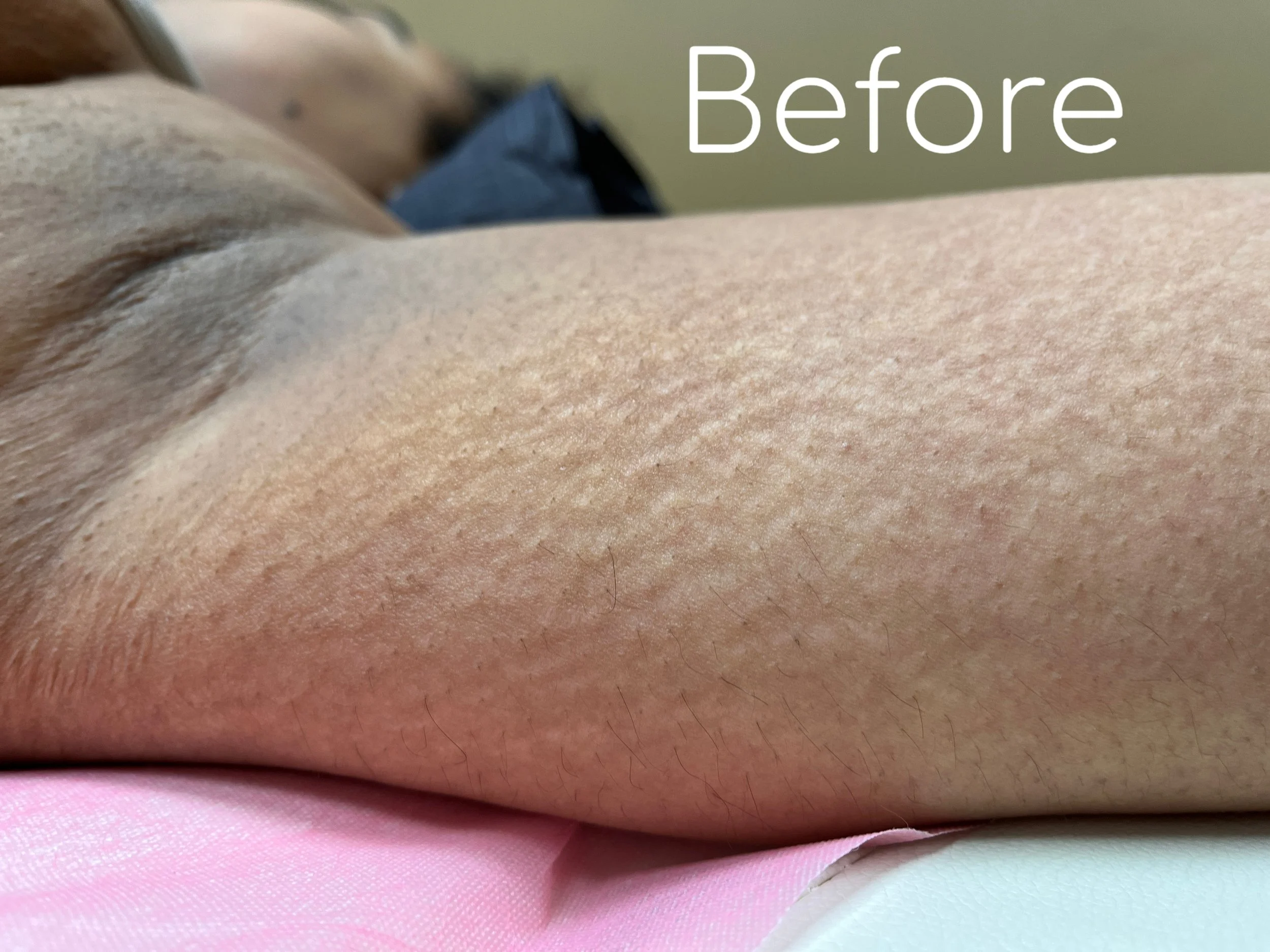
A: Immediately following your treatment, your stretch marks/scars will be bright red and puffy. The puffy appearance will go away over the next few days. The redness in your stretch marks will turn brown (due to melanin production, and fade slowly. Its important not to panic during this time. Two weeks after the procedure, some clients become frustrated because the stretch marks look worse than they did before the treatment. Remember, it takes time for collagen to work it’s way back into this area. Tattooing is technically an injury to the skin and we need to allow your body time to heal the lacerations and time to correct it’s pigment. Please expect 1-3 months for healing.
Q: Will it heal a different color over time and would I need color correction?
A: It’s normal for color to soften slightly as your skin heals and regenerates. Over time — usually after a few years — some fading can occur depending on your skin type, sun exposure, and lifestyle. If that happens, a touch-up or color correction session can refresh and rebalance the pigment.
Q: Can I put products on my skin?
A: Only use the aftercare products I provide or approve. Avoid applying lotions, oils, or makeup on the tattooed area until it’s fully healed, as they can interfere with pigment retention and increase the risk of infection. My recommended aftercare product is called Silver Wound Care gel by a company named Silver Biotics.
Q: What is ink-based camouflage tattoo?
A: At my studio, I call this an air brush tattoo. It’s great for flat surface scars and white stretch marks that have little to no texture/depth. Before we use ink, it’s important to start with the inkless method to heal the texture. Once texture is healed, we can use this method to further camouflage the appearance by using a semi-translucent ink to “air brush” and fix any color imperfections. This is achieved by using a skin matching device that picks the perfect ink color for your skin. Because it semi-translucent, it will fade and tan with your skin.
Q: How do you determine ink color?
A: Color matching is based on your individual skin tone, undertone, and the area being treated. I custom-blend pigments during your appointment and test them against your skin in both natural and artificial light to ensure the most seamless, natural result. I am also trained in advanced ink chemistry, and I will often utilize color neutralization techniques to ensure your tattoo doesn’t heal yellow or orange over time.
Q: What causes stretch marks and scars?
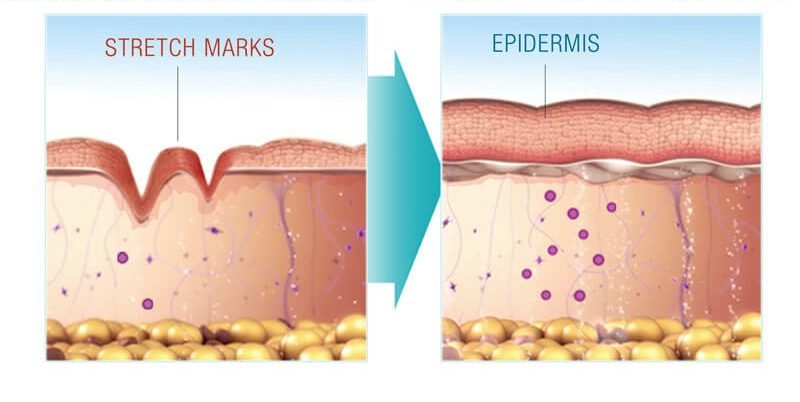
A: When we get scars and stretch marks, there is a gap in the basement membrane of the epithelial (epidermis) layer that prevents collagen and elastin from reproducing which creates a rough texture that is not receptive to UV rays (little to no melanin). Thus, creating a scar/stretchmark that is rough and never regains its normal skin color.
Q: What if I’m pregnant?
A: Paramedical tattooing cannot be performed during pregnancy or while breastfeeding. This is for your safety and your baby’s — tattooing can introduce stress to the body and carries a small risk of infection or allergic reaction. It’s best to wait until after pregnancy and breastfeeding are complete before scheduling your session.
Q: Why do people do this?
A: People choose paramedical tattooing for many reasons — to camouflage scars or stretch marks, recreate areolas after surgery, blend skin tone inconsistencies, or restore confidence after medical or cosmetic procedures. It’s not about vanity — it’s about healing, self-acceptance, and feeling whole again.
Q: Why did you start doing this?
A: I started doing paramedical tattooing to help people feel confident and comfortable in their own skin again. Many of my clients have scars, stretch marks, or areas of pigmentation loss that affect how they see themselves. Through advanced tattooing techniques and color blending, I can help restore a more natural, even appearance — it’s incredibly rewarding to be part of that transformation.
Q: How long have you been doing paramedical tattooing?
A: I’ve been performing paramedical tattooing professionally since 2022. Over that time, I’ve trained extensively in scar camouflage, stretch mark revision, areola restoration, and scalp micropigmentation, continuously updating my techniques to offer the most advanced, natural results possible.
Q: Why is my diet so important in the healing process?
A: Collagen is essentially protein. It is CRUCIAL that your body is getting enough protein to create the max amount of collagen possible. When your session is complete, you’ll be given an Amazon link with a list of items I recommend for aftercare. WHAT TO AVOID in your diet! Stay away from sugar, carbohydrates, and smoking of any kind (including THC). These foods not only inhibit collagen production, but they can actually damage our collagen which leads to premature aging and slow healing. I know we can’t stay away from carbs forever, but your results will be the very best if you can maintain a solid diet for the first 30 days. 90 days is ideal. Please don’t waste the money on this procedure if you aren’t ready to commit to the recommended diet and the daily supplements. It truly makes a world of difference.



Do you have a question about stretch mark tattooing not answered here? Submit your question below so I can continue to improve this page.
-Meagan, founder
Utah Stretch Mark Lab